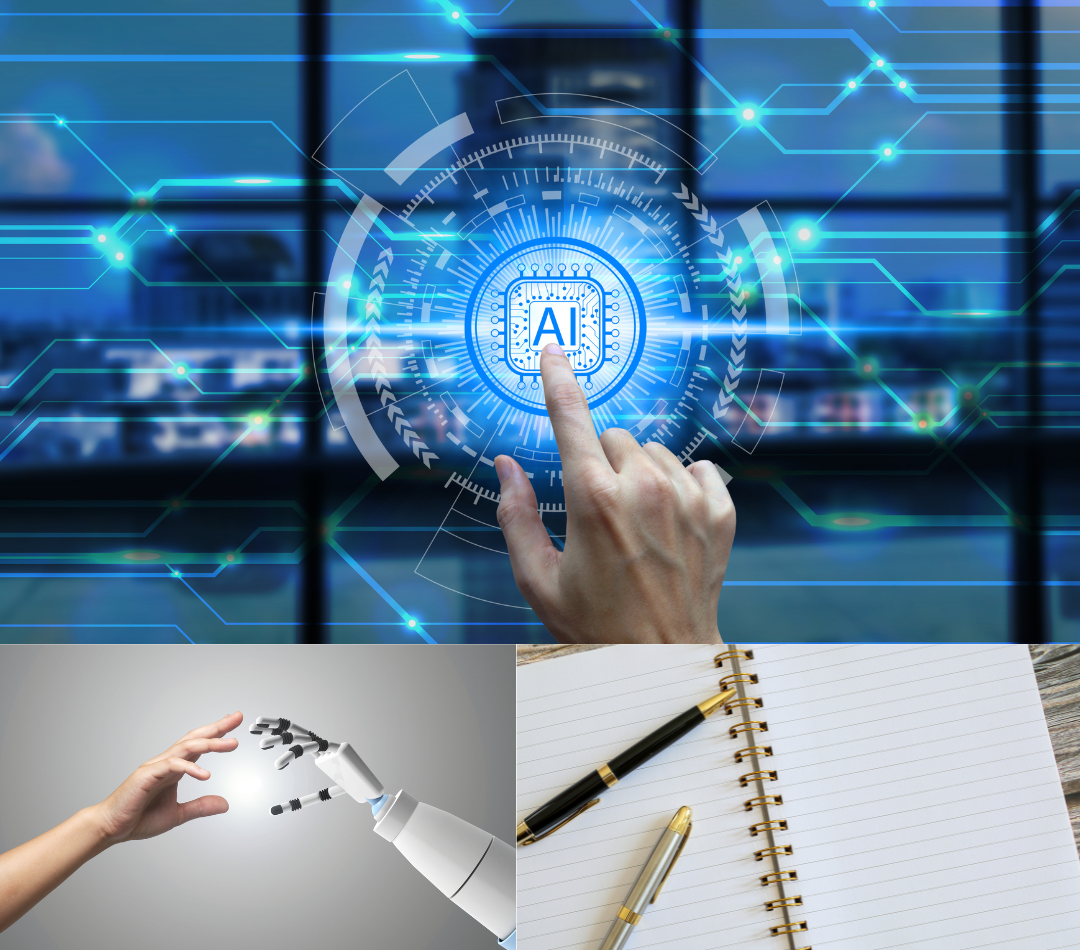
The year 2105 is finally witnessing what human have manifested or shall I say feared. A strange, surreal mix of dreams and nightmares. Technology had soared to unimaginable heights.
Schools no longer had buses; instead, AI-driven pods floated on air cables, picking kids up with mechanical precision. Traffic? Barely a memory. The streets below were ghostly quiet, and even the buses were bizarrely futuristic—seats popping up only when needed, disappearing when not. Cities gleamed with vertical gardens stretching across shimmering skyscrapers.
It was efficient. It was perfect. It was soulless.
Meera sat at her glassy desk, staring at the soft glow of her AI software. Her fingers hovered, itching to do… something. She wasn’t even sure what anymore. There were drafts piled around her—perfect, polished, sterile drafts that weren’t hers. Not really. All she did now was feed the AI prompts and tweak what it spat out. Slowly she has become a curator, not a creator anymore. She hated it.
Deadlines didn’t wait, and the world didn’t seem to care about storytelling anymore—at least not the messy, beautiful, human kind. It seems the magic of storytelling has vanished from the memory of humans. AI had taken over that too, convincing everyone it could write better, faster, and for eternity.
“Have we really forgotten how to write?” she muttered to herself.
Out of habit, Meera opened a secret forum she’d found months ago. She never posted, just lurked. But today, a single message stared back at her:
“Have we forgotten how to write? Meet me where the ink once flowed.”
Something in her chest tightened. She read it again. And again. Against her better judgment, she clicked. Moments later, her phone buzzed with a message: an address. A library. 4 PM.
She was anxious and curious about the whole deal. She took the high-tech bus to the end of the city and then, after a 20-minute walk, she found herself in front of a huge brick building. The huge wooden door seemed so ancient. Especially in an era of smart doors and high-tech locks. Her knuckles grazed the surface, knocking softly.
The door creaked open, and an elderly man greeted her with a smile. “You came,” he said, as if he’d been expecting her all along.
Inside, the library was alive with history. A grand round table sat at its heart, a chandelier casting warm light on the faces around it. They weren’t strangers; not really. Writers, like her. Some old, some young, but all of them with that same worn-out, restless look.
“Welcome,” the man said, taking his place at the table. “I’m Mr. Roy. And this…” He gestured at the people seated around him. “…is the beginning of something the world has forgotten. We want to bring back the power of the pen.”
Meera raised an eyebrow. “The pen? In 2105?”
Roy smiled knowingly. “Not just the pen. Imagination. Emotion. Stories born from our flaws, fears, and hopes—not algorithms. We’re creating an anthology. A collection of human stories. Something AI could never replicate.”
She hesitated. “But… isn’t AI a tool? It helps us write faster, more efficiently. It can even mimic emotions almost perfectly. Why fight it?”
Suhani, a woman sitting across from her, let out a bitter laugh. “That’s what they said fifty years ago. It started as a tool, yes. But then we relied on it. Stopped thinking. Stopped creating. Feeding prompts became our only skill, and we let machines tell us we weren’t good enough anymore. If we had used AI merely as an assisting tool, the world might not have ended up like this. But the more we relied on AI, the more creativity we lost, and the more dependency we created. The line between assistance and dependence blurred, and somewhere along the way, we forgot how to think for ourselves. Isn’t that true?
Meera’s throat tightened. She’d felt that—was feeling it even now. She stared at the pen Roy handed her, its weight strange in her hand. She hadn’t held one in years.
“Try,” Roy urged softly.
She did. At first, it was awkward, the words coming in fits and starts. Her mind felt slow, rusty, like an engine that hadn’t been used in decades. It felt as if she had been living with writer’s block, and it felt normal that way.
But something shifted as she sat in the library garden, notebook in hand. The air was crisp, the scent of old books hanging heavy, and for the first time in ages, she let herself think.
She started humming softly. May be it was a poem trying to surface; a poem on the changing world, or perhaps the changing humans within it.
“In a world of shells and air cables,
Where words are fed, not found,.
The words were still blurry, but she could feel them coming. Something was building, something raw and imperfect but totally hers.
Days turned into weeks, and the stories began to take shape. The anthology felt like a rebellion—a quiet, stubborn act of defiance against a world that had forgotten how to feel. But the AI companies weren’t blind.
Inscribe AI Corp, the giant behind the writing algorithms, caught wind of their project. It flooded the internet with knockoffs and plagiarized versions of their work, trying to drown them out. The group fought back, clinging to analog methods: pens, paper, typewriters, and whispered meetings in the dead of night.
The day the anthology was published, Meera felt something she hadn’t in years—hope. Titled ‘Where the Ink Once Flowed’, the book spread like wildfire, igniting something long buried in people’s hearts.
For the first time, readers remembered what it meant to connect—not with perfection, but with the flawed, messy, miraculous art of being human. They were captivated by the magic of storytelling, as if awakened from a trance.
And Meera? She was writing again. Really writing. And it felt like coming home.
PS: This post is part of Blogchatter Blog Hop
 Cerebration
It is scary to even think of our words getting rusty because we have stopped thinking and creating our own words for writing.
LikeLiked by 1 person
True! I feel too much dependency on technology will make our brains sluggish, reducing our ability to think critically and creatively!
LikeLike