

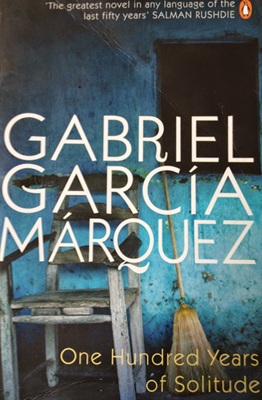
At first glance, ‘One Hundred Years of Solitude‘ by Gabriel García Márquez can feel overwhelming—a labyrinth of names, magical happenings, and sprawling generations. When I began reading it, I couldn’t progress in one go. The story felt dense, the characters tangled, and the slow pace. I had to take a break, let the words settle. But when I returned, slowly and steadily, something remarkable happened: the story claimed me.
I became a part of the Buendía family—rooting for them, despairing with them, and aching at their solitude. The narrative is so rich in human flaws and emotions that it’s impossible not to find pieces of oneself in its characters. They are dreamers and doers, lovers and loners, revolutionaries and recluses, each of them navigates a life shaped by love, ambition, and regret.
Blurb
In the mythical town of Macondo, founded by José Arcadio Buendía and his wife Úrsula, generations of the Buendía family live through the rise and fall of their town. They face love, betrayal, war, and progress, all while trapped in cycles of solitude and repetition. Márquez creates a world that mirrors human history and the intimate details of family life.
The last generation really hooked me. Aureliano, The last surviving Buendía, deciphers the ancient prophecies written by Melquíades, a mysterious gypsy who visited the family generations ago. The prophecies reveal that the Buendías were doomed from the beginning, trapped in a cycle of repetition and solitude.
The lines which stayed with me long after the book was over:
“Races condemned to one hundred years of solitude did not have a second opportunity on earth.”
Analysis
One Hundred Years of Solitude is a story of human flaws repeated through generations. The Buendías are trapped. A familiar pattern of unfulfilled love, unspoken regrets, and unshakable solitude. The author reflects human struggles to balance dreams with reality through José Arcadio’s obsession with discovery, Aureliano’s detachment from life, and Úrsula’s relentless resilience.
After I finished the book, I wondered what makes this narrative unique. It is, in fact, the intertwining of emotions with magical realism. A girl ascends to the heavens while hanging laundry, ghosts wander the family home, and time itself bends and loops back on itself. These elements make the emotions larger than life.
Impact
The book’s ability to capture life’s cycles is remarkable. The way history repeats, how mistakes echo across generations, and how love and loss are universal constants among these. The writing doesn’t rush you; instead, it demands you immerse yourself in the slow unraveling of Macondo’s tale.
When I closed the book, it left me with a lingering melancholy, a bittersweet understanding of life’s fragility and beauty.
If you find the beginning challenging, take a break. But don’t give up. Because somewhere along the way, you’ll find yourself not just reading the story, but living it. And by the time you finish, Macondo will feel like a place you’ve always known, and the Buendías will be family.
PS: This post is part of #ReadingwithMuffy hosted by @kohleyedreads for the March prompt-

 Cerebration