

The new year ushers in festivities, and for many of us across India, the year truly begins with the comforting warmth of Makar Sankranti.
When I was little, Sankranti meant just one thing—food. Tasty, sweet, soul-soothing food. Being a Bengali, I associated the festival with Puli Pithe more than anything else. Those soft rice dumplings filled with coconut or jaggery, sometimes dipped in creamy kheer, were enough to fill my winters with happiness. Every home had its own recipe, its own style, its own little twist, yet every version tasted heavenly.
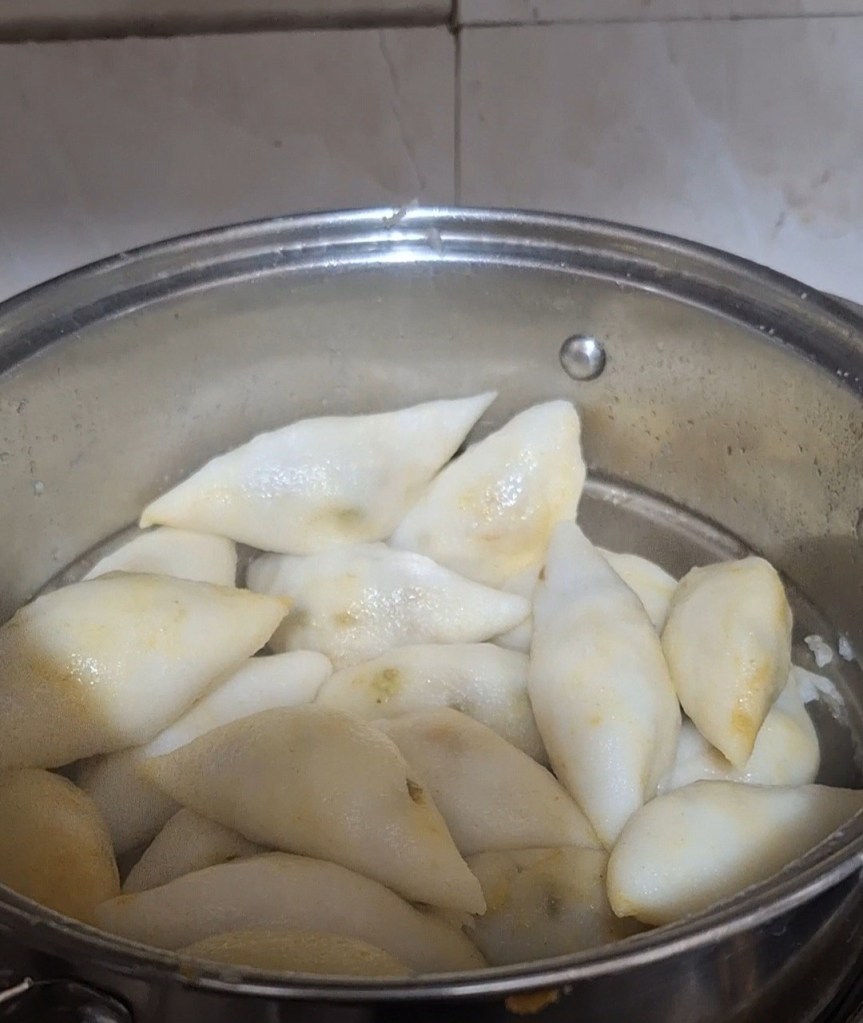
And, of course, winter in Bengal is incomplete without Nolen Gur—the fragrant date-palm jaggery that appears only in this season. Makar Sankranti celebrates the new harvest, honouring the farmers and fields that sustain us. And in Bengal, this season gifts us Nolen Gur, that molten gold of winter, without which Pithe feels almost unfinished. Even today, the memory of hot steaming Pithe can warm my soul in seconds.
My days during college changed my understanding of Sankranti altogether. Living in a hostel in Delhi, I celebrated it the Punjabi way for the first time.
Lohri night meant bonfires crackling under the open sky, hands stretched out toward the flames, rewri and popcorn being passed around, and laughter echoing through the hostel courtyard. It was the same festival, yet completely new—new customs, new stories, new warmth.
I soon realised Sankranti appears in many forms across India.
In Tamil Nadu, it’s Pongal—rice boiling over in clay pots as a symbol of abundance.
In Gujarat, the sky becomes a battlefield of colours as people shout Kai Po Che! during their grand kite festival.
Assam celebrates Magh Bihu with community feasts and bonfires, while Maharashtra marks the day with tilgul, reminding everyone to “eat sweet, speak sweet.”
Every region celebrates differently, yet the essence remains the same—gratitude, warmth, and the joy of new beginnings. I feel blessed to have experienced this festival through the traditions of friends from different regions.
But as I grew up, I realised Makar Sankranti is much more than food or customs. It carries a quiet, powerful philosophy.
The festival marks the moment the Sun begins its northward journey, a period known as Uttarayan. This shift in the Sun’s movement also symbolises a transition from cold to warmth, from confusion to clarity, from stagnation to renewal. It teaches us that life, too, has seasons—and every winter eventually gives way to light and warmth.
In the Mahabharata, even Bhishma Pitamah waited for this very moment. He was blessed with the boon of choosing his time of death. He lay on the bed of arrows until the Sun turned northward. Only then did he choose to leave his mortal body, because Uttarayan was believed to be an auspicious passage—a time when the soul moves toward illumination and liberation.
Makar Sankranti is indeed a celebration of light, warmth, new beginnings, and abundance. As the new year makes way, let’s celebrate this festival with good food, sweet words, and the warmth we wish to see reflected in the world.
PS: This post was published in the January 2026 edition of Thought Lantern founded by Palak Chauhan.
PS: This blog post is part of ‘Blogaberry Dazzle’ hosted by Cindy D’Silva and Noor Anand Chawla in collaboration with Sameeksha Reads.
 Cerebration