

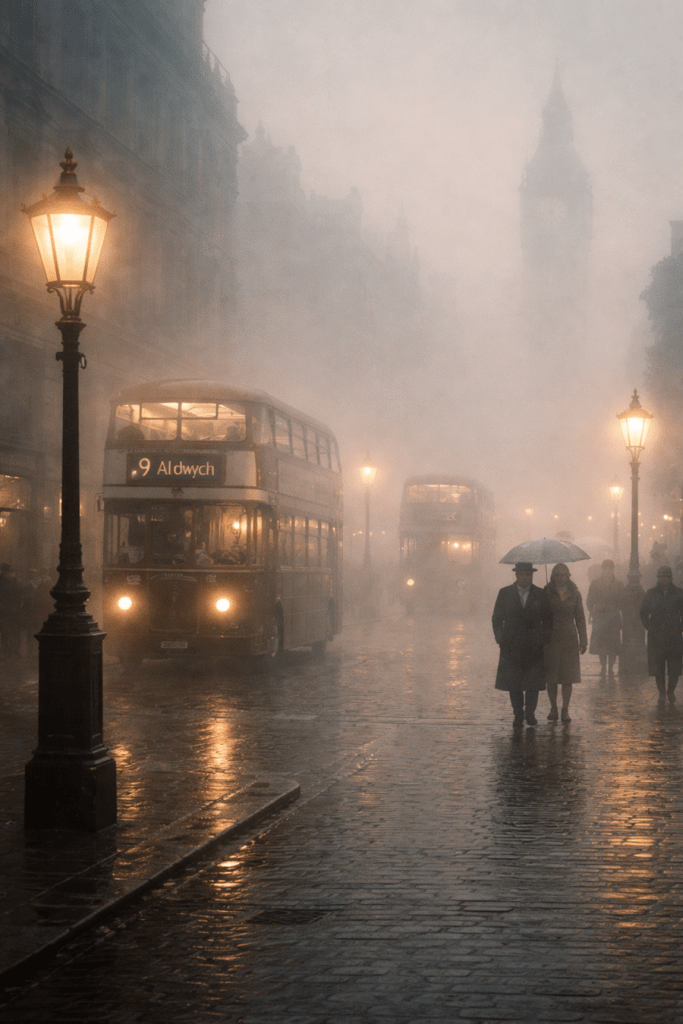
In December 1952, a thick fog settled over London. Fog wasn’t unusual. Londoners were used to winter smog. But this fog felt different, it was a silent death trap.
. Thick, toxic fog — caused by coal burning, cold weather, and stagnant air — blanketed the city for five days.
Visibility dropped to a few feet, public transport stopped, and people struggled to breathe inside their own homes.
But the real danger wasn’t visibility. It was the air. What began as a winter inconvenience soon became a catastrophe, claiming thousands of lives.
By the time the fog lifted, thousands had died. Initially, about 4,000 deaths were reported. Later studies suggested over 12,000 people may have lost their lives.
The event became known as The Great Smog of 1952 — one of history’s deadliest environmental disasters.
But something changed after this tragedy.
Public outrage led to new laws, including the Clean Air Act of 1956, which transformed pollution control worldwide.
Now, more than seven decades later, scenes from Delhi during peak winter pollution feel hauntingly familiar. Dense smog covers the skyline, schools shut down, flights get delayed, and people step out wearing masks — not for a pandemic, but for survival. Rising pollution, vehicular emissions, construction dust, and crop burning combine to create a modern-day fog that echoes the past.
The tragedy of 1952 led to the historic Clean Air Act of 1956, proving that change is possible when lessons are learned. But as cities across the world struggle with worsening air quality, one question quietly lingers — Is history repeating itself?
Perhaps the deadliest fog of 1952 is not just a story from the past, but a warning for the present — reminding us that history doesn’t just teach us facts… it teaches us how to breathe better, if we choose to listen.
PS: The post is part of #BlogchatterA2Z Challenge 2026
 Cerebration