

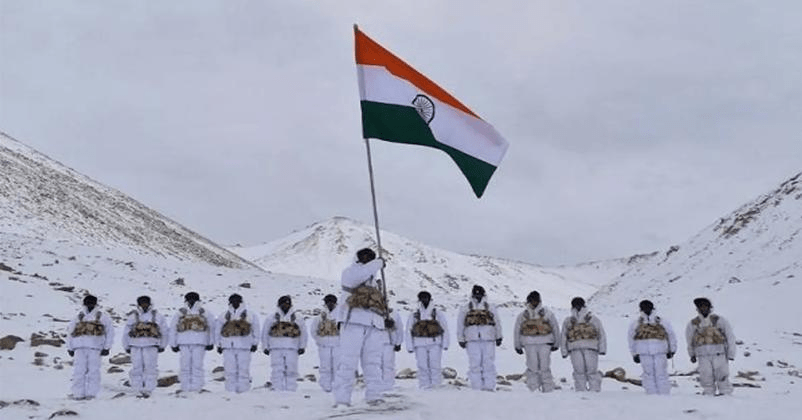
High in the Himalayas, where temperatures fall below −50°C, where oxygen is scarce, and survival itself is a battle, lies Siachen Glacier. It lies in Ladakh on the tri-junction of the India–Pakistan-China border.
This is not just a battlefield. It is the highest and coldest battlefield on Earth.
In April 1984, India launched a bold mission — Operation Meghdoot — to secure this icy frontier before Pakistan could.
The date 13 April 1984 was chosen strategically and symbolically. It coincided with Baisakhi, when surprise was expected to be greater, and some accounts also link it to the raising day of 1 JAK Rifles.
The codename Operation Meghdoot, inspired by Kalidasa’s Meghaduta (“Cloud Messenger”), added a poetic resonance to a daring mission launched amid the clouds and ice of Siachen. It evoked soldiers moving through clouds to secure the icy heights and send a powerful message before the adversary could act.
What followed became one of the most extraordinary strategic military operations in history.
The Background — A Map Left Incomplete
After the Simla Agreement, the Line of Control between India and Pakistan was defined only up to a point called NJ9842.
Beyond that, the agreement simply read: “Thence north to the glaciers.”
This vague description created ambiguity — and opportunity. Pakistan began allowing foreign mountaineering expeditions in the region, quietly asserting control over Siachen.
India noticed and realised whoever reached first would control the heights.
The Race to the Top
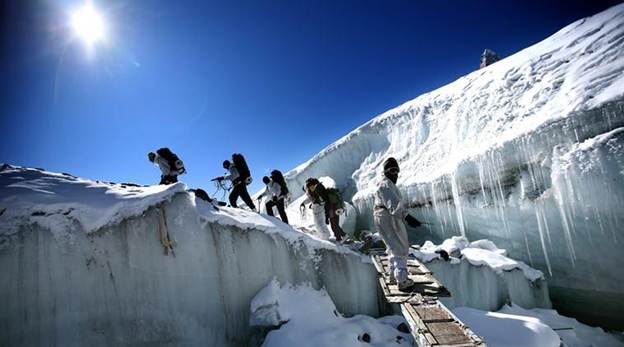
India acted quickly, and on April 13, 1984, Indian troops were airlifted by helicopters onto strategic mountain passes:
- Bilafond La
- Sia La
- Gyong La
Indian forces, led by Lieutenant General Prem Nath Hoon, secured the heights before Pakistan could arrive.
This was extremely risky. Helicopters struggled in thin air, soldiers jumped into unknown terrain, and every step could mean falling into deep crevasses.
But the operation succeeded.
India gained strategic dominance over the glacier.
The Real Enemy — Nature
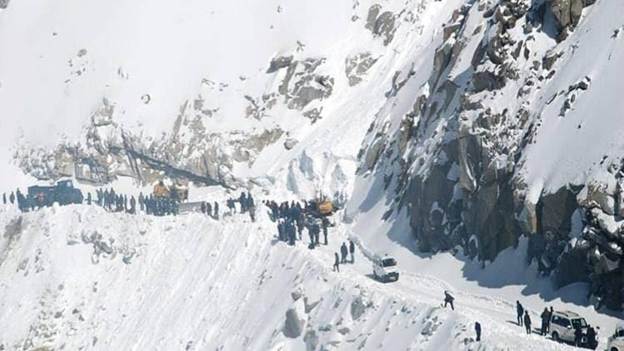
Interestingly, in Siachen, nature claims more lives than bullets.
Soldiers face -50°C temperatures, blizzards, avalanches, frostbite, and oxygen deprivation
Even simple tasks become dangerous. Drinking water requires melting ice, walking requires ropes, and sleeping requires special gear. Yet, soldiers remain stationed year-round.
This is not just warfare — It is endurance beyond imagination.
Why Siachen Matters Strategically
Siachen overlooks key areas:
- Karakoram Pass
- Saltoro Ridge
- Border areas near China and Pakistan
Holding Siachen means:
- Monitoring enemy movement
- Strategic high ground advantage
- Preventing territorial shifts
In mountain warfare, who holds the heights controls the battle. India understood this — and acted first.
A Silent War That Continues
Unlike dramatic wars with tanks and bombs, Siachen is a silent war. Soldiers continue to serve in extreme conditions — protecting borders silently. Since 1984, India has maintained control over the glacier.
Why Operation Meghdoot Was Strategically Brilliant
Operation Meghdoot demonstrated:
-First-Mover Advantage. India secured the heights before Pakistan.
-Intelligence-Based Planning
-India acted based on subtle signals.
-High-Altitude Warfare Innovation
-Helicopter landings at extreme altitude were rare then.
-Psychological Dominance
-Holding the highest ground created long-term advantage.
Mindful Reflection
Siachen teaches us something deeply meaningful. At Siachen, courage is not just about fighting — It is about enduring.
And sometimes, the greatest battles are fought where survival itself becomes strategy.
References:
Operation Meghdoot – Wikipedia
Operation Meghdoot: How Indian Army chose the name
PS: This post is part of #BlogchatterA2Z Challenge 2026.
 Cerebration